 Childbirth is a huge amount of physical work. The nine months of pregnancy change your posture, shift your center of gravity, and stretch your abdominal and pelvic muscles. And then there’s no sleep, no time for yourself, and a huge desire to “get back in shape” as quickly as possible. I understand that desire. But it’s extremely important not to rush – and to really act wisely.
Why “the sooner the better” is a dangerous fallacy
Social media creates the illusion that you can and should go to the gym a month after giving birth. But the body works differently. After giving birth, the ligaments remain soft for several months – the hormone relaxin, which helped the joints move during pregnancy, does not disappear immediately. In most women, the abdominal muscles separate in the midline – this is called diastasis recti. The pelvic floor has been subjected to significant stress and needs to be restored, not subjected to additional pressure.
Early intense exercises – crunches, planks, jumping jacks – during this period do not strengthen, but rather injure. Pelvic organ prolapse, worsening diastasis, and pelvic pain are the real consequences of rushing.
Three stages of recovery
The first 6-8 weeks: smooth start. This period is not for training, but for adaptation. The only thing you can and should do from the first days is breathe. Diaphragmatic breathing gently activates the deep abdominal muscles and pelvic floor muscles, relieves tension in the lower back and helps the body begin to “assemble” from the inside. Literally 5 minutes of lying on your back – and this is already the result.
Add some light walking to this when you feel ready. Movement improves circulation, helps with swelling, and lifts your mood.
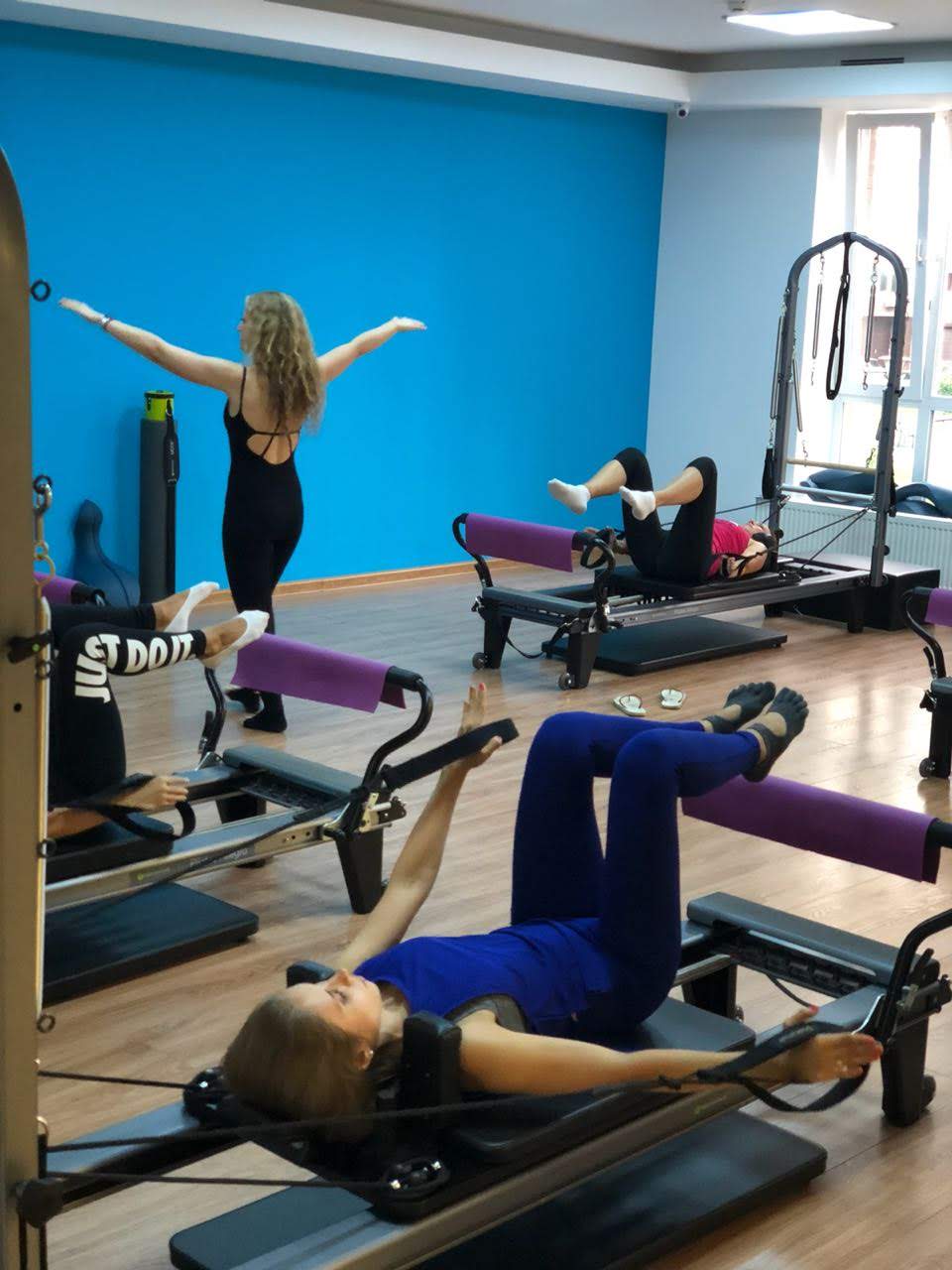
6–12 weeks: Conscious recovery. After consulting your doctor and if there are no contraindications, you can start a light Pilates practice. The main goal here is to reconnect with your body and feel the muscles that have been “silent” during pregnancy.
Exercises for this stage include pelvic floor activation, neutral spine bridges, gentle pelvic mobilizations, and breathing techniques that engage the transverse abdominis muscles. No sit-ups or straight leg raises – these put pressure on the pelvic floor and worsen diastasis.
3–6 months: gradual increase in complexity. If recovery is progressing well – the diastasis is narrowing, the pelvic floor is functioning without symptoms of incontinence or discomfort – you can move on to a more active practice. Standing exercises, balance work, and gentle strengthening of the legs and glutes are added. At this stage, Pilates becomes a full-fledged workout that restores strength and stability.
How to know if you’re up for the challenge
There are a few simple signs that your body is recovering at the right pace: no heaviness or pressure in your pelvic area after walking, no urine leakage when coughing or sneezing, and no pain in your C-section scar (if you had one) when moving. If any of these symptoms are present, it’s a signal to slow down and consult a specialist, not a signal to “be patient.”
Why Pilates and not just fitness?
Pilates targets the structures that suffer the most after childbirth: the deep abdominal muscles, pelvic floor, and spinal stabilizers. It’s not just a “light” workout—it’s precise bodywork that restores function, not just burns calories.
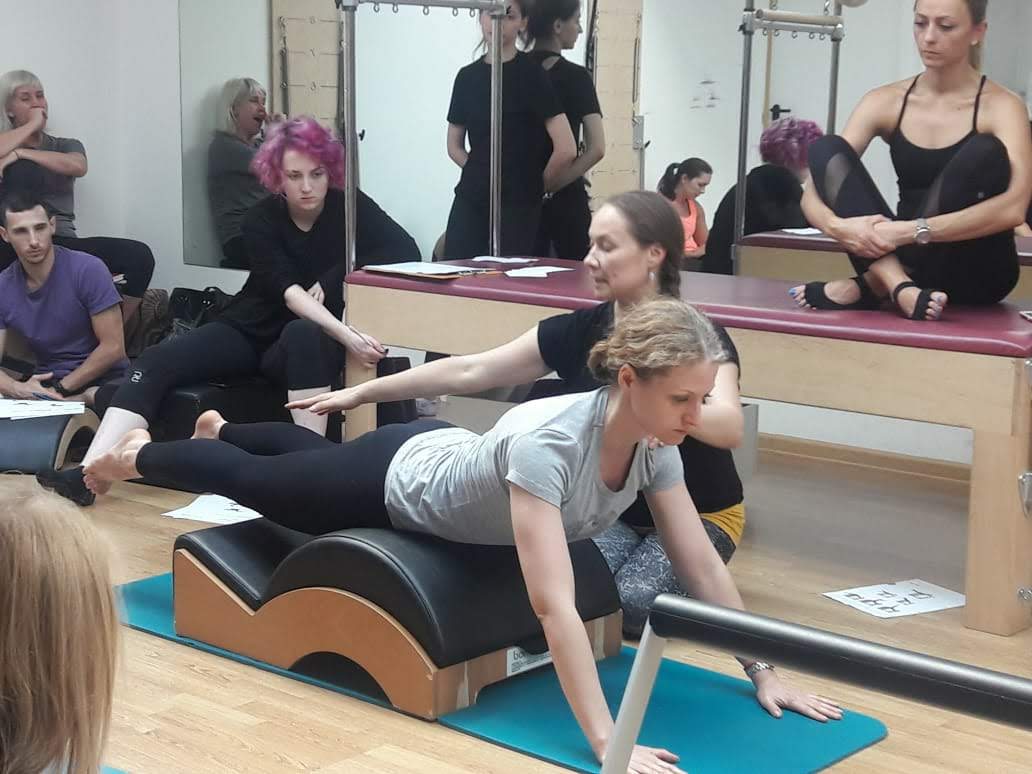
That’s why I always start with individualized training in the postpartum period: every woman has her own birth history, her own muscle condition, and her own pace of recovery. Group classes are good at the stage when basic stability has already been established.
The main thing is to listen to your body, not social media.
Postpartum recovery is not a marathon. It’s a time to take care of yourself as carefully as you would your baby. Gently, consistently, and with respect for what your body has just accomplished.
If you don’t know where to start, start with your breathing. Right now, right where you are. It’s the first step to recovery.